COVID-19’s second wave in 2021 turned medical oxygen from a background utility into a national emergency. In the months that followed, a great deal of oxygen infrastructure was installed across India very quickly. Hospitals received oxygen plants on their premises, liquid oxygen tanks, pipelines to the wards and large numbers of oxygen concentrators.
By the time I joined the workforce at PATH in 2022, the pandemic had changed shape. The emergency had passed and the headlines had moved on, but states were left with a great deal to manage and many decisions to make. A plant installed in a hurry still has to be run every day, maintained every month and repaired when it fails. Someone has to decide which equipment to keep using, how to train the people who operate it, and how much oxygen each hospital actually needs. The challenge had changed. The immediate emergency had receded, but maintaining the new infrastructure, building the skills to run it and keeping the oxygen supply reliable all needed sustained attention.
The work
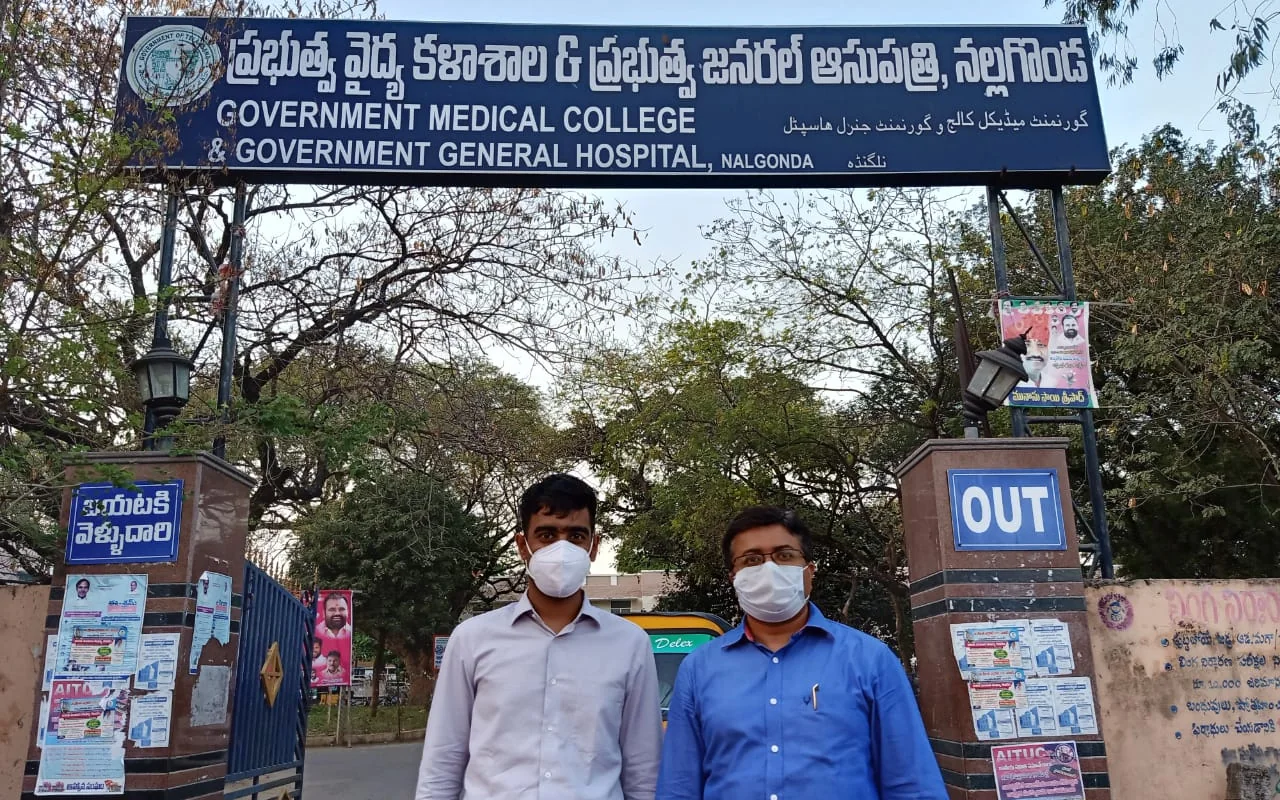
Under USAID- and Google.org-funded initiatives, I provided technical advice on medical oxygen to the governments of Andhra Pradesh, Tamil Nadu and Telangana, across about a hundred secondary and tertiary care facilities.
The work covered the whole oxygen system, from the place where oxygen is made or stored to the patient’s bedside. That meant pressure swing adsorption (PSA) plants, which make oxygen on site from the air, and liquid medical oxygen (LMO) tanks along with the supply chain that keeps them filled. It also meant medical gas pipeline systems, oxygen concentrators, the way oxygen is given to patients, and fire safety, because oxygen makes everything burn faster.
Much of it began with seeing things for myself. I carried out facility assessments to understand what each hospital had, what condition it was in and what it needed. Those visits complemented what I had learned from technical documents. Some important problems were not visible in the equipment specifications. They became clear only in the practical conditions around the equipment.
A lesson in concrete
One example has stayed with me.
A PSA plant works by drawing in large volumes of air, compressing it and passing it through a material called a molecular sieve, which separates the oxygen from the nitrogen. Everything about that process is sensitive to what comes in with the air, and dust is one of a plant’s worst enemies. It can clog the intake filters, wear out the compressors and damage the sieve itself, which can shorten the life of an expensive plant and lower the purity of the oxygen it produces.
That is why PSA plants are meant to sit in a shed built to a particular standard, clean and well ventilated, with a properly finished floor. During rapid installation, some facilities did not fully meet that standard. In some of the sheds I visited, the concrete floor had not been cured properly. Concrete that is not given time to cure develops a weak surface that keeps shedding fine dust as people walk on it and as the equipment vibrates. Sweeping does not solve it. However often the floor is cleaned it keeps producing dust, and the problem stays until the surface is treated or sealed.
It was a seemingly minor construction detail with potentially significant consequences, because dust from the floor could keep finding its way into the equipment. I have carried that lesson into all my work since. The success of a piece of technology can depend on a seemingly ordinary thing around it, the kind of thing one would not usually notice.
Tools
Alongside the advice, we tried to support the states with practical calculations. PATH, Jhpiego, USAID and many people working on oxygen around the world have very generously built and shared tools for this. One of the most useful is the demand estimation tool, which works out a facility’s oxygen needs from its bed capacity and a few other parameters. With it, a state can plan its supply and decide which sources of oxygen make sense for which hospitals.
For anyone working on medical oxygen, the resources section of the Global Oxygen Alliance is a good place to start. It brings together national oxygen plans, technical guides and primers from many countries and organisations, and you may well find something useful there.
Work extended beyond India
Following discussions with WHO SEARO, WHO country offices and representatives of country governments, the work was taken forward collaboratively across the region. With everything we had learned on the ground, we were fortunate to contribute to two publications from the WHO South-East Asia Regional Office.
- The Regional manual with operating guides on respiratory care equipment and devices, which WHO describes as aiming to “provide foundational information on key biomedical aspects of maintaining respiratory care equipment”, written for biomedical engineers, technicians and related staff
- The Generic training modules on oxygen/respiratory care equipment
An innovative approach to knowledge dissemination
Almost everyone in the system was new to running oxygen infrastructure at this scale. The knowledge needed to keep it running did exist, in manuals, guidance documents and training material. But much of it was in English, and it was not always in the hands of the technician facing a problem in a district hospital at night. That gap led us to develop a multilingual, WhatsApp-based chatbot for oxygen equipment, which I have written about separately.
This was some of the first work of my career, and I am sincerely grateful to have been exposed to all of it so early.