Key points
- Science fiction often imagines things before anyone knows how to build them, and sometimes those ideas inspire real work.
- My picture of health care in 2050 is simple. Help arrives on time, your records follow you, and you stay in charge of your own data.
- None of it is pure fantasy. Pieces already exist in Estonia, Singapore and India.
Science fiction has a habit of giving people ideas. In the 1960s, Star Trek showed a doctor waving a small handheld device called a tricorder over a patient to find out what was wrong. Decades later, a real competition, the Qualcomm Tricorder XPRIZE, challenged teams to build handheld devices that could help people check their own health. The story came first and the engineering followed.
I like reading science fiction for the same reason. It lets you imagine a world without first asking how hard it would be to build. So here is my daydream of health care in 2050, told as one ordinary day. Then come the real places where pieces of it already exist.
A day in 2050
Meena lives in a village a long way from the nearest town. She is seven months pregnant.
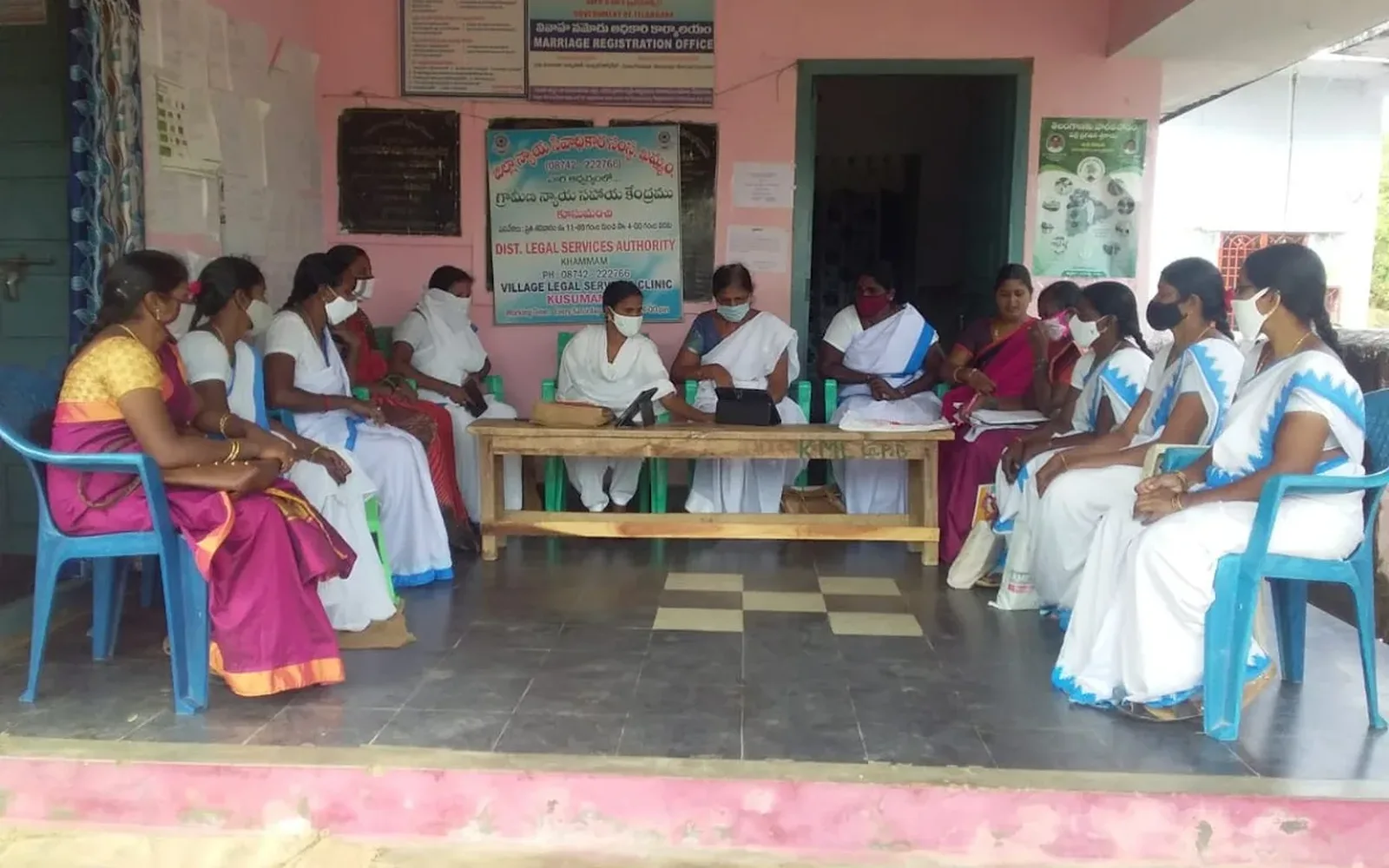
In the morning, her phone reminds her, in her own language, that her check-up is today. She does not need to carry a file of papers. The health worker who comes to her home can already see her history, her earlier check-ups, her blood tests and the medicines she takes, because Meena has given permission for that.
The health worker checks her blood pressure. It is a little high. A message goes straight to the doctor at the nearest health centre, who looks at the readings that afternoon and asks Meena to come in the next day. A vehicle is booked for her.
At the health centre, the doctor sees everything the health worker recorded, without Meena repeating her story. Her medicines are adjusted, and her next visit is scheduled before she leaves.
A few weeks later, labour starts early, at night. The ambulance arrives quickly because it knows where she is. The hospital it takes her to already knows she is coming and what her blood pressure has been. Her baby is born safely. The baby is registered the same day, and its vaccinations are planned for the next year.
That evening, Meena opens an app and checks who has looked at her records. She sees the health worker, the doctor, the ambulance team and the hospital. No one else. If she wanted to, she could stop anyone from seeing them again.
Nothing in Meena’s day is magic. Each part of it is ordinary. What makes it feel like the future is that all the parts work together, for everyone, every time.
The pieces that already exist
What surprises me is how much of Meena’s day already exists somewhere in the world, just not all in one place.
Estonia, records you can check. Estonia has run a national electronic health record since 2008, built on its X-Road system, which lets different government databases talk to each other securely. Estonians can log in and see their own health records, and they can see who has looked at their data. That is exactly what Meena does at the end of her day.
Singapore, one record that follows you. Singapore’s National Electronic Health Record, launched in 2011, lets doctors in different hospitals and clinics see a patient’s key health information. People can also see parts of their own records and book appointments through the HealthHub app.
India, building at a very large scale. India has built digital public infrastructure for very large numbers of people. During the COVID-19 pandemic, the CoWIN platform recorded more than two billion vaccine doses and issued digital certificates for them. The eSanjeevani telemedicine service passed 500 million consultations in September 2026. Under the Ayushman Bharat Digital Mission, hundreds of millions of people now have an ABHA number, which is designed to help them access and share their health records digitally.
What it would take
If the pieces exist, why is Meena’s day still a daydream? Because putting them together is the hard part. It takes trust, so that people are happy to share their data. It takes privacy protections that are real, so that people stay in charge. It takes health workers who are trained and supported, roads and networks that reach everyone, and care to make sure nobody is left out because they do not have a phone or cannot read. Most of all, it takes many organisations agreeing to work together.
None of that happens by accident. But I think it helps to have a picture of where we are trying to go. Science fiction is good at giving us that picture. The rest is up to the people who build things.
Views are my own.
Sources and further reading
- XPRIZE. Qualcomm Tricorder XPRIZE
- e-Estonia. e-Health records
- News On AIR. eSanjeevani achieves milestone of 50 crore teleconsultations, October 2026
- e-Estonia. X-Road
- Synapxe. National Electronic Health Record (Singapore)
- Ministry of Health and Family Welfare. CoWIN
- eSanjeevani, national telemedicine service
- Ayushman Bharat Digital Mission